Everything and Anything Related to Boating and the Boating Industry !

This blog forum is designed to inform boaters and fans of boating about the latest happenings at our dealership and in the marine industry. In each post you will find information about our latest models, as well as boat tips, industry news, and a variety of other items related to Austin Boats & Motors, boating, wakeboarding, surfing, fishing and more.
Showing posts with label Fishing. Show all posts

Tuesday, December 31, 2013

Keeping Your Fillet Knife Sharp


When you catch that beautiful fish that you are excited to stick on the dinner table that night, you don't want to mess up that beautiful piece of meat when you fillet it just because your knife isn't sharp enough. Here we will talk about how to keep that fillet knife sharp so you will always have a perfect cut of meat.


Getting The Burr

The burr is a wire edge that forms across the blade opposite of what you are sharpening. Your job is not finished until you can see or feel the burr.

The Edge Bevel

Most kitchen knives have a 20-degree edge bevel. For filleting, an edge bevel of 12 to 15 degrees per side provides a clean easy cut and reasonable resistance to dulling. If you don't cut bone, monofilament or bait with your fillet knife, a 15-degree bevel will be okay for you to use.

Set The Bevel

The easiest way to figure out what angle to set the bevel would be to stack two quarters high. Using this method is not exact, but it gets you pretty close.

To Push or To Pull

We each have those friends who swear by pulling the knife across the stone, and those who swear by pushing. Quite frankly, it doesn't matter. Both ways are just as effective. What does matter, is that the spine moves ahead of the edge. So, just make sure to angle it.

Sharpen

Draw the blade across the stone, sweeping it from heel to tip as you go. Once you have a full-length burr, sharpen to create a burr on the other side. Finish with blade-first strokes, like slicing a sliver from the stone, until the burr disappears.

Keeping your fillet knife sharp is important and now you have the tools and know how to do it saving you time and money.


Wednesday, October 30, 2013

The Art of Catch and Release


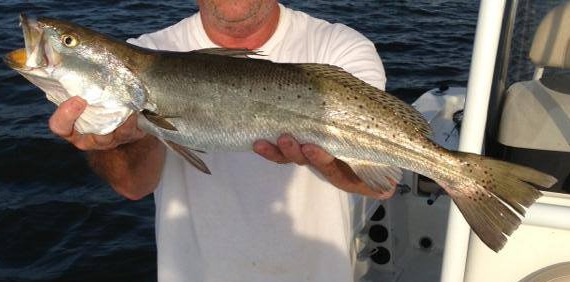
There are some of us who fish to put food on the table and then there are some of us who fish just for the fun of fishing. If you are the latter, catch and release tactics are important to ensure that you are not sending a hurt fish back into the water. We will cover a few tips to help perfect your catch and release fishing game.


The first thing to remember is to always handle a fish with wet hands. This well help to reduce the damage to the fish's protective mucous coating. This mucous helps to prevent disease to the fish and makes glide smoothly through the water.


Our goal is to provide protection to the fish while we are fishing, one of the ways to accomplish that would be to use a rubber net rather than a knotted nylon one. Doing this will help you to prevent abrasions to the fish. When you are handling the fish, always use two hands to support the weight if it is over 5lbs. If it is a smaller fish, you can hold it vertically by the lower jaw.


Once you have finished with your photo shoot it is time to release the fish. You will want to gently lower the fish into the water until it begins to swim away. You may have to slowly swish the fish back and forth to encourage him to start swimming.


The biggest tip to ensure that you have a successful catch and release day would be to plan ahead. Take along a de-hooking tool or needle nosed pliers to assist in removing the hood as quickly and safely as possible.


Now we have covered the basics for a catch and release fishing trip you can learn more here. Go out and practice your newly discovered catch and release tips and make sure to send us a picture with your catch! Let's go fishing. 


Thursday, September 5, 2013

So You Want To Start Fishing


Imagine this; you are walking into your local sporting goods store because you have decided to take up the sport of fishing. You walk over to the fishing isle and you stand in front of what seems like a mile long display of different types of fishing rods. You are about ready to throw your hands up in the air and say I’ll just go buy some fish. Well, hang on a second before you give up. Yes, it can be overwhelming but let me help you to make it a little more manageable.


Picking a rod is an important process in fishing. I mean without a rod how are you going to catch anything? Now, back to the mile long display. What you are trying to catch plays a huge part in the rod that you choose. There are 5 different categories of rod/reel combinations. They are, spin casting, spinning, bait casting, trolling, and fly casting. The first decision you have to make is what kind of fish are you looking to catch?


Once you know what you are looking to catch, that will help you to decide the length of the rod that you will need. The longer the rod the longer the cast, more control over the line, and more accuracy. A shorter rod will give you the power and heaviness that a longer rod cannot provide.


Congratulations, you are shortening that overwhelming rod isle. The next step would be to choose a reel. For us first time anglers, a spinning reel is suggested for use. Of the five different categories mentioned, spinning reel holds the line in a spool and the line is cast off one end.


Your last decision in picking your new fishing pole is down to how much you are willing to pay. They can cost from $10 to thousands of dollars. Once you think you have found the rod you want, pick it up and handle it. Give it a good once over to check for cracks or defects. Once you are satisfied with your choice, it is time to hit the water and begin enjoying the sport of fishing.